Hello there,
As layoffs continue to affect the industry in early 2024, I wanted to give a quick toolkit to AAA marketers who’d like to work in indie now.
While I was looking for work, I had some interviews with indie companies telling me that I wouldn’t be a good fit because of my AAA experience and that I couldn’t work without CGI and with very expensive creatives agencies. At least they didn’t want to take the risk to have someone like me.
But fear not, you have a wealthy AAA expertise to bring to a studio or an indie publisher. You might just need do deconstruct some of your beliefs, as I had to.
Here is what I learned in my half-year working at a publisher and some insights I didn’t have before starting.
STEP 1: HAVE A REAL COMMUNITY FIRST APPROACH
Not so long ago, one of my unpopular opinions about gaming was that we shouldn’t care about the community.
While all gaming companies will swear they care about community feedback and sentiment, indie games actually listen and thrive with them.
When you have a limited budget and reach, any players who can be an advocate and promote your game is a huge plus.
When you sell millions of copies, a core community of a thousand players is just a drop in the ocean.
Same with a thousand angry players about a bug compared to millions of sales, they don’t account for much.
On the other hand, at indie studios and publisher your community will be a key success factors at launch. They’re going to be the first ones to give positive reviews right at launch, get your posts supported on Reddit or ask their favorite content creators to play your game.
I think we should all aim for a community and players first approach in marketing and product management for indie games.
STEP 2: NO ONE CARES ABOUT YOUR GAME.
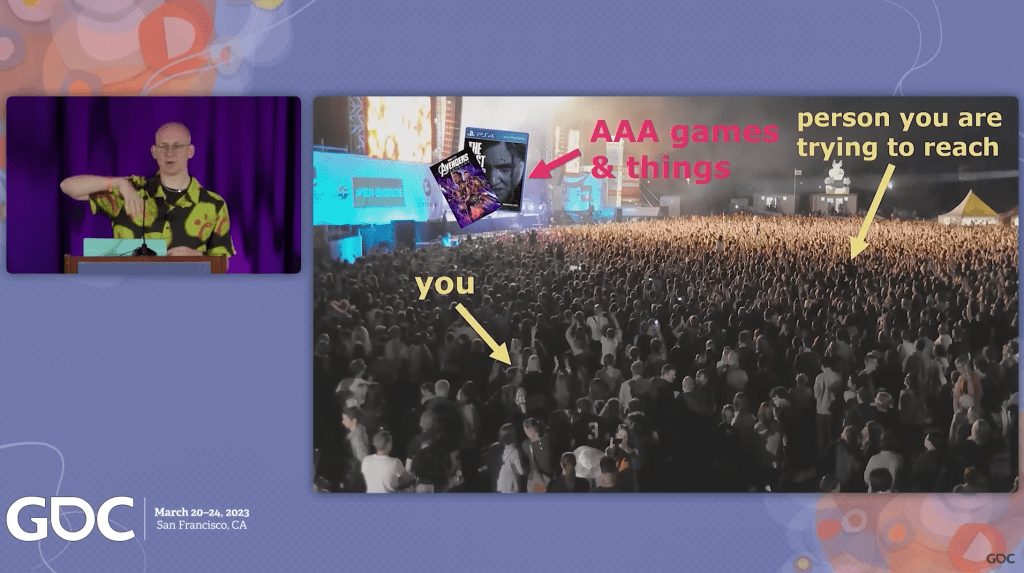
The Golden rule of Game Promotion: No One Cares About Your Game. The most enlightening video I’ve seen on indie marketing topics! I couldn’t agree more on all the topics covered.
Thomas Reisenegger / @olima / Future Friends
The “No One Cares” approach feels so true for indie games. It marked such a big change in the way I’m thinking about indie marketing.
When you’re working on AAA games, every spotlight is on you.
You can create your own pulse points, lead the agenda and capture the attention of the gaming space. Heck, you can even invite press and content creators to your studio to do it.
Most of your marketing content are going to be pushed by 1st parties, store, press, content creators, basically anyone.
It will even work despite your PR team advice about having too many trailers to release in a short timeframe.
Yes, I’m looking at you “Preorder mission trailer” … Funny thing, it’s still sometimes working, perhaps because you generously purchased a significant amount of media space.
This approach can also be used for your take on the competition. You shouldn’t care about competition, you should focus on excelling on your niche.
It’s not a major concern if a AAA game is launching on the same date as yours. No one cares about your game anyway, so why would you?
It can even be a worthy strategy to release the same day as AAA. See Chillquarium testimony here.
Apply this philosophy to your trailer creation: real gameplay first and foremost. You won’t have the budget to create CGI full of lore and action anymore, nor a 7-minute long gameplay trailer. Because, anyways, no-one cares about it.
STEP 3: USE AND REUSE RESSOURCES WISELY
Following the no-one cares approach you can fully repurpose whatever marketing content you’ve created. Since there’s still a wide pool of players who haven’t seen it yet, they won’t get bored, you don’t need to start everything from scratch.
Reuse your key trailers shots, placing them in front of a new audience again.
You don’t have the luxury to target 7 times everyone in your target audience as before. You don’t need something fresh to show at all times.
You don’t need 15 different formats for various websites paid format, 1st parties request, localization needs and so on anymore.
Challenge what you need and prioritze the main platform where you need them. Don’t try to shoehorn your beautiful horizontal format into a vertical format anymore but create it for vertical first. It’s not going to bother some crazy creative director anymore.
Your trailers won’t be played in movie theaters or broadcasted at dear E3 anymore. So no worries about micro details and top-notch perfection no one is going to see.
STEP 4: FORGET ABOUT AAA GAMING AUDIENCE
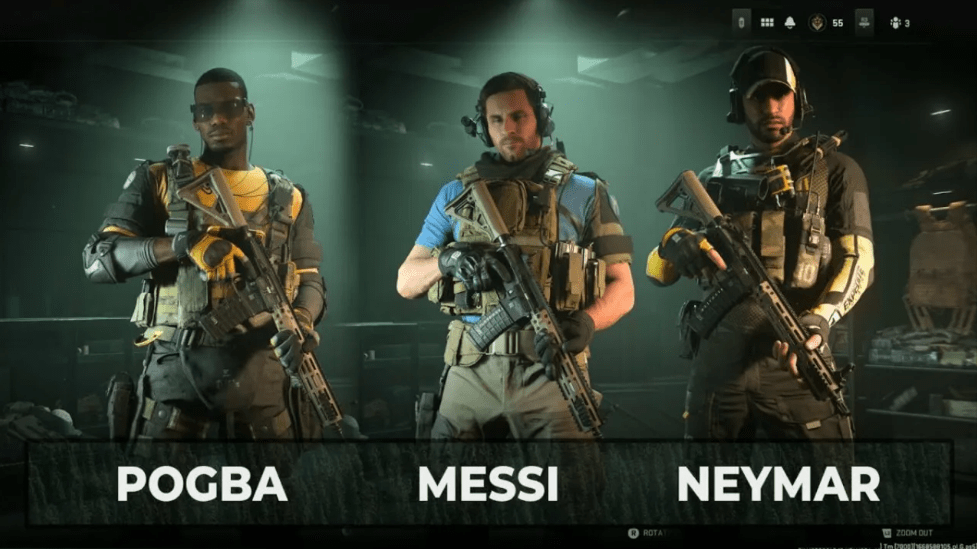
Good old “Call of Fifa” players or the “gaming” audience in the widdest targetting sense.
[Image source softonic. A brilliant marketing activation for CoD during the world cup selling skins from famous football players.]
In indie, you won’t be talking to the mainstream AAA gaming audience anymore.
The dearest “gaming” audience, the ones who only know about COD, Fortnite, Fifa and perhaps another handful.
They’re not your target audience anymore.
Traditional gamers don’t buy indie games.
Indie players audience buy more games a year than a traditional gaming audience. They are also more ready to try out new games. (Source here – while it’s conducted from a Heavy Indie population it’s still a very worthy read).
They’re also more picky and have to divide their attention and spending between a thousand more possibility than the next COD/FIFA.
STEP 5: PURSUE EVERY OPPORTUNITY
In smaller structures you won’t have dedicated teams for every possible opportunities that you used to have at bigger companies. No more licensing, partnership, dozen of key accounts managers and sales partners.
You’re on your own! You need to embrace this product management approach of being the entrepreneur for your game. You’ll have to pursue potential partnerships, game bundles with other developers, festival subscriptions to gather more visibility, press outreach etc.
This also means that you can’t overlook any opportunities to put your game in front of new players and audience.
I used to find creating trailers for Gamestop, Nvidia or whatever other partners super boring. Today I’ll be more than happy to do it because I know how big those outlets can be and help get more sales.
I almost miss the good old times creating Nvidia trailers.
STEP 6: KEEP YOUR STANDARD HIGH
You’re used to working with lots of different teams with a wide variety of jobs and expertise.
Maintain the same level of creativity you had there.
Remember all the great ideas that you left past or that were killed by management. You might be able to do them on your own now.
Chances are you excel at project management, those are very valuable transferable skills.
You’re good at reporting info, making sure everyone has all the tools they need to work, create engagement within the teams so keep using them on smaller studios. Bear in mind that you don’t have middle-manager pushing you for infos all the time so stick to what’s really useful for you and your team.
Also you’re probably used to excellence and creating the best assets possible. Don’t settle for less and keep this mindset to push your games at their best!
That’s it for today but I think it’s just the beginning of a serie as I’m still learning a lot. .
Thanks for the read,
Matthieu


 STEP UP YOUR GAME