It’s not about the story you tell but the shared experience and narrative that players co-created during gameplay that matters most.
INTRODUCTION
If you missed the first part of this series of articles on the Players Expectation Need system you can find it here :
- Intro
- CHALLENGE THE PLAYERS (Or Competence)
- FREEDOM OF CHOICE (Or Autonomy)
The third intrinsic psychological need of the PENS model is relatedness or the need to care for and be cared for.
While it’s no surprise that relatedness is key in multiplayer games, it can also play a crucial role in single-player experience.
Relatedness emerges from the interactions of players with the game environment whether it involves real people or NPC with whom they can interact.
It becomes a core motivator for players to interact with the game world or with other players.
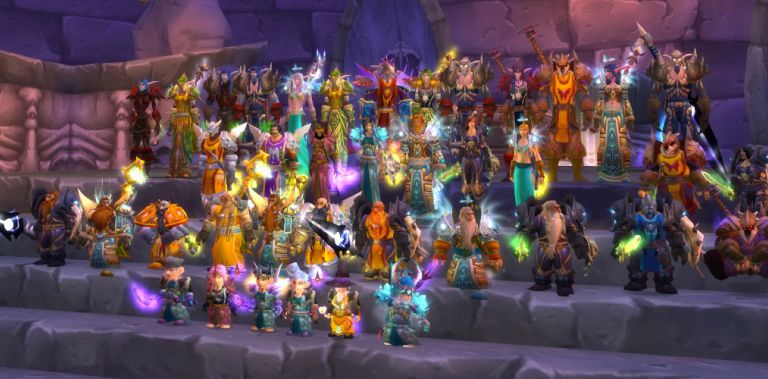
Whether it’s in a Guild in wow or playing solo in Counter-Strike relatedness is a key driver for players.
USING RELATEDNESS AS AN ENGAGEMENT TOOL.
Relatedness has a big role in enjoyment, perceived value, and long-term engagement in games. If we look at the games that have been there for decades (LoL, CS, WOW, etc) it’s clear that relatedness is a fundamental element in their successes.
Relatedness in multiplayer games is the key to having players create their own stories.
Relatedness enables players to create their own cherished memories and enjoyment of your game. They are more likely to remember slaying a boss or achieving an ace with their team because it’s a shared memory, rather than if they had accomplished it alone.
I’m sure you can remember a specific game or raids in the thousands you have played because it was a shared moment in space with others.
IMMERSION TO CREATE ENGAGEMENT IN SOLO GAMES.
While Relatedness is evident in multiplayer games it can also be a significant driver for solo game.
We can all think about a game we played where the side quests were as good or even better than the main story. We create a deeper bond with NPC, so that we wanted to help or punish them.
The Witcher 3 is one of the game I remember most for his side quests and love interests rather than the main quest because I wanted to care for the characters.
The Red Baron in Witcher 3 – CD PROJEKT RED
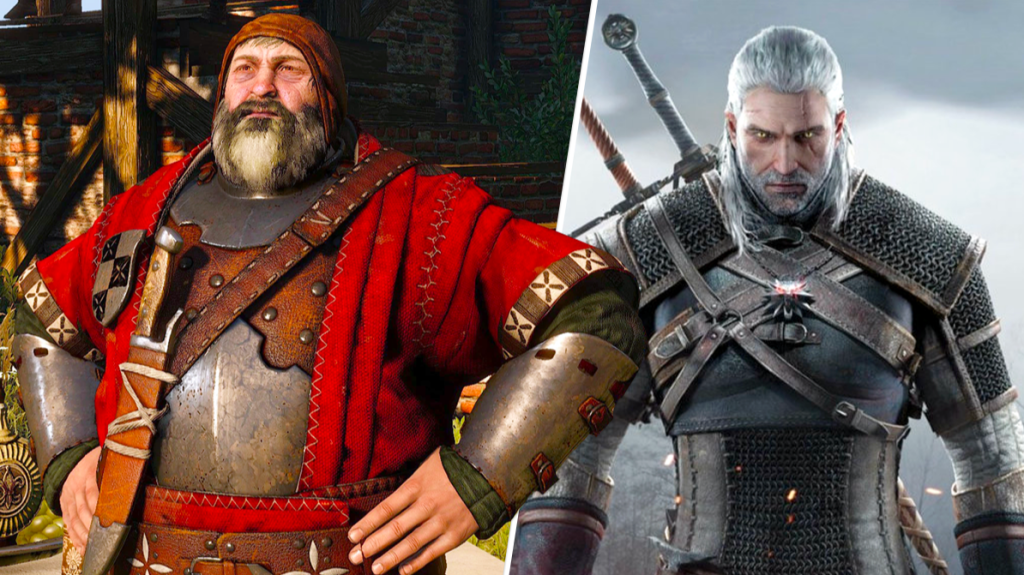
Relatedness can be achieved through NPC reacting, positively or negatively, to players’ behavior or past achievements.
Failure to do so can hinder the relatedness and disrupt the game’s narrative flow and credibility.
I always cringe when I slaughter half a town and nobody bats an eye when I return, it just feels odd and reveals the limitations of Relatedness and NPC interactions with me.
If you excel in creating relatedness elements your players are going to be engaged in your game both in the gameplay and emotionally.
They will become emotionally immersed in the game and with their characters.
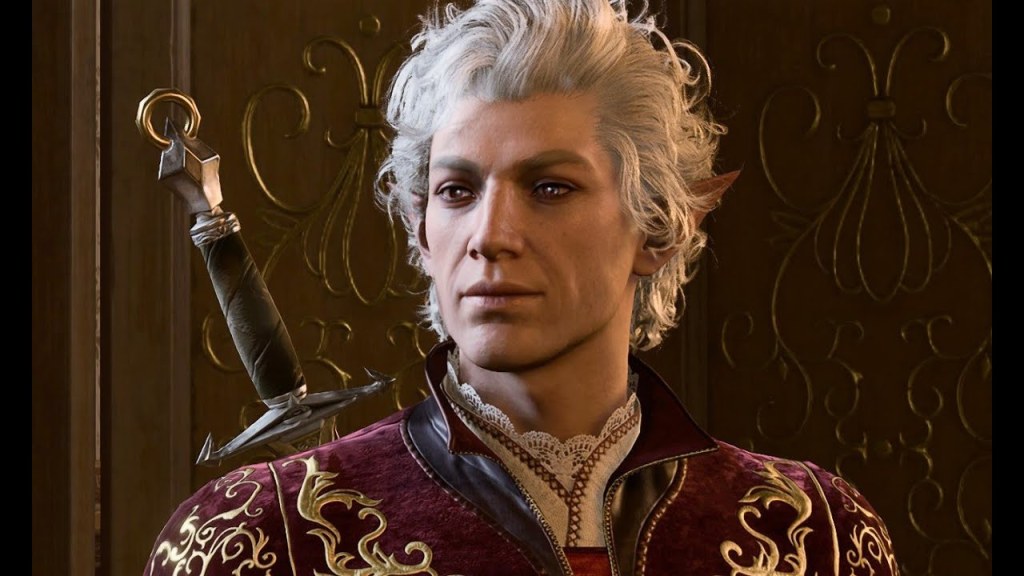
Of course, Baldur’s Gate 3 – again – it’s not surprising to see Neil Newbon getting awarded for his performance as Astarion. A loveable character in a way with an amazing redemption story if players cares to save him. Or unleash his powers.
This leads them to make decisions based on their characters’ emotions rather than their own when they play. And this is golden!
They will be narratively immersed, providing a strong incentive to finish the game to see what the end of the story is. This is key to secure players engagement, retention, returning sessions and ideally make them experience the best of what your game has to offer.
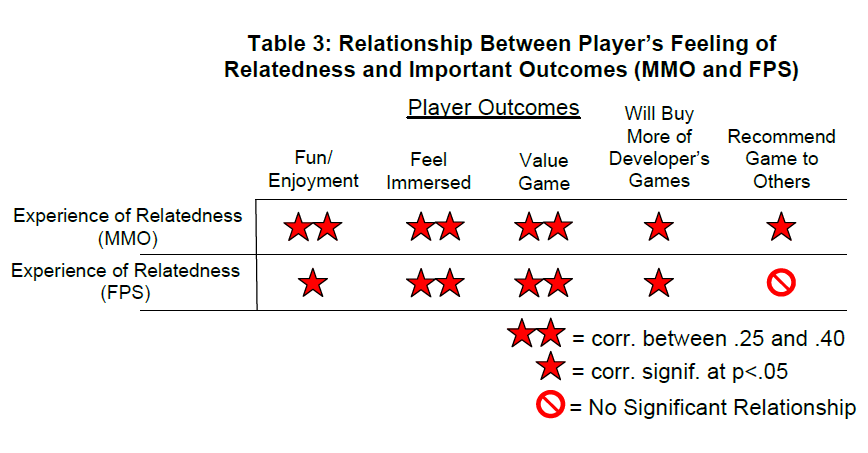
The Immersyve analysis ranks only Relatedness for MMO & FPS where the multiplayer and online aspects are key, the study is from 2007, remember.
Nowadays, I feel RPG would score very high in relatedness where players will expect the game to react to their past decisions.
Applied to your game development :
- In a multiplayer create safe and efficient way for players to communicate which each other (Overwatch is an excellent example of this)
- In single-players create compelling characters that players will want to engage with – should it be by helping or confronting them.
- It helps a lot to learn about narrative design to create deep and interesting characters players will want to take care of.
Applied to your game’s marketing :
- Show multiplayer gameplay if you have it, ensuring viewers understand that it’s a multiplayer experience. It can be done easily by showing split-screen moments for example.
- Reveal a portion of the cast of characters players will encounter leaving some mystery to pique curiosity and encourage further exploration.
- Use factions in the game to get players engaged with one or the others, allowing them to form connections or choose not to associate with specific factions. It also help with replayability as you might want to chose one path in a playthrough and the other after.
As always thanks for the read
Matthieu
Keep reading the series: Intro to player needs · Competence: challenge the players · Autonomy: freedom of choice