Hello there,
Welcome to my second article about the Player Experience Needs System.
In this post you’ll learn how to manage smartly your game challenge for sustained enjoyment and how to show it to players;
Read the intro if you missed it:
The Tutorial:
The game rules need to be understood first, which is where your tutorial is coming.
Understanding the core game mechanics is what Immersyve calls the “price of admission” of the game.
Learning these mechanics enables players to navigate the game, but it should not be considered as part of the “true” gaming experience. Players shouldn’t feel “challenged” when trying to grasp the game mechanics.
You should view your onboarding process as a “zero-sum” issue. A poor onboarding experience will have a negative impact, whereas a good one will go unnoticed. Players will give bad reviews if they don’t understand the mechanics and are punished for it.
Remember, your audience doesn’t have your knowledge on the game. Playtesting on a new audience is key to make sure your game is understandable.
OPTIMUM CHALLENGE IS NOT ENOUGH.
One of the motivational driving force behind gaming is conquering challenges.
The PENS theory expands upon psychologist Csikszentmihalyi’s Flow theory, which emphasizes matching the game’s challenge to the players’ skill level. The Flow theory is about the state of full concentration and engagement on a task.
Players experience the most satisfaction when their skill level aligns with the game’s challenge. As players and the game’s challenges evolve, the challenges must continually enhance.
This cycle of motivational need and satisfaction compels players to repeatedly engage with same game content at higher difficulty level, such as New Game + or any roguelite ever growing difficulty. µ
Players have different level of mastery that needs to be accounted for.
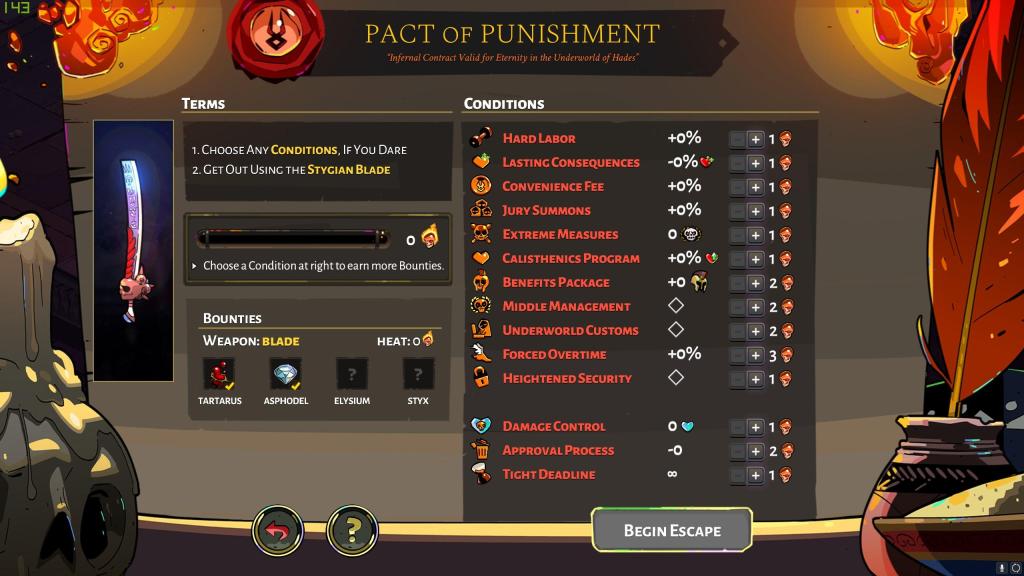
Letting players choose their own difficulties and challenges is a good way to let them experience their need for Competence the way they want.
Hades, and other roguelite, are very efficient at keeping players engaged in more challenging experience while providing almost the same core experience.
LET PLAYERS EXPERIENCE THEIR MASTERY!
Immersyve study reveals that, in addition to an optimal challenge, you should allow players to revel in their mastery. This feeling is what ultimately brings players back to the game.
Think about the excitement of obtaining a powerful upgrade that enhances gameplay and progression. One that will have this “I just want to try it for one more game” kind of feeling.
I always find I’m enjoying Mastery when I reach one of the upgraded weapons on Vampire Survivor for example. For a couple of minutes I’m strong enough to enjoy the game without struggling! The user experience and satisfaction by opening chests in Vampire Survivor is also one of the best I’ve experienced!
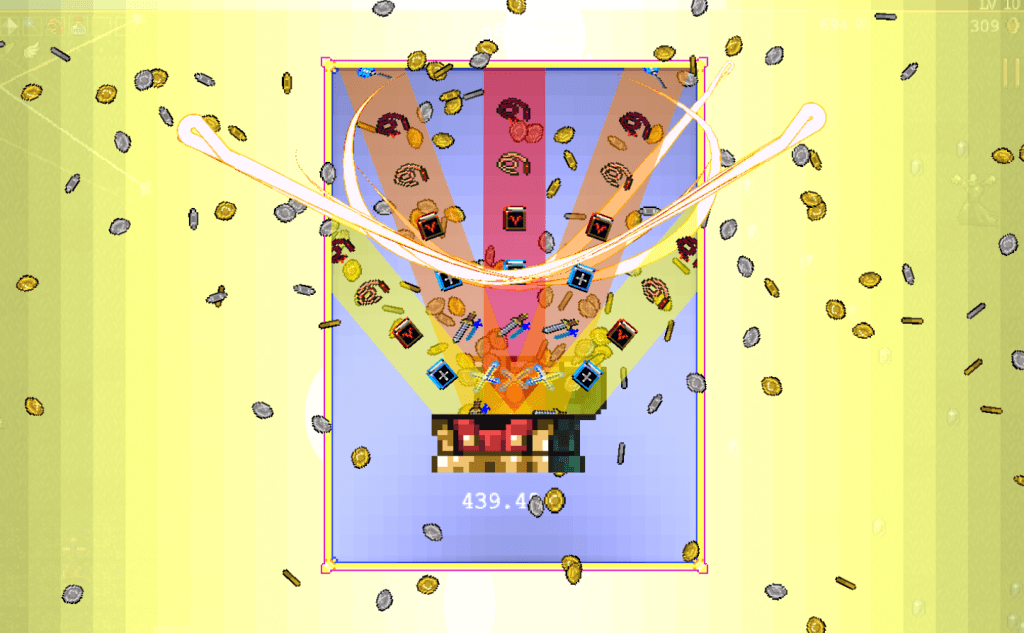
Some ideas for maximizing competence need satisfaction in gameplay from Immersyve.
- Don’t focus only the idea of “optimal challenge”. Instead, be sure gameplay is giving players the opportunity to put their mastery in action.
- Consider giving players the leg-up, particularly in pivotal situations where they are feelin as there is more “on the line”.
- Provide consistently positive (but relevant) feedback during gameplay.
- Sustained enjoyment is more a function of continued success than feeling continually stretched.

A primary aim in constructing this model is to showcase its relevance to crucial outcomes, such as enjoyment, immersion, and perceived value. Across diverse games, player profiles, and genres, Immersyve specific investigations assessed whether satisfaction in PENS competence reliably predicted essential success metrics, consistently revealing robust correlations.
Illustrative snapshot from the Immersyve study
HOW TO IMPLEMENT THIS IN YOUR GAME?
- Players should not struggle to understand basic game mechanics.
- Introduce game mechanics gradually, allowing players to experience and engage with them before increasing the challenge.
- Tutorials and a user-friendly interface are crucial for helping players seamlessly comprehend your game’s mechanics, considering what may be natural for you might not be so for new players.
- Providing immediate, clear feedback on player actions contributes to mastery and satisfaction.
- Focus on rewarding good behavior rather than punishing bad behavior.
- Maintain the challenge curve at an appropriate level.
HOW TO APPLY IT TO YOUR MARKETING?
- Showcase end-game content to your players providing a goal for mastery and illustrating the most enjoyable part of the game.
Showcasing end-game content will create a direct connection for the players towards its goal. - Integrate In-game elements that cater for the challenge-motivated players such as weekly challenges, difficulty settings, Iron man mode or any specific achievements that require mastery. If you’re into the challenge motivational factors there are multiple ways to let players experience their mastery.
- Appeal to players needs for mastery by showcasing different ways of mastering the game :
- Various weapons in a FPS
- Various deck strategy in a deck building game
- Specifics build in a RPG
- Various tactics in X-com
There shouldn’t be one way to master your game and this is what we will see in the next article – Using Autonomy.





 STEP UP YOUR GAME